
Learning from Our Heroes: Stephen Biko, Jamie Raskin, Phil Ochs, Sinead O'Connor, Emma Tenayuca & More
We honor moral courage, subversive creativity, commitment, resistance and excellence

The portal is open for paid subscriptions, by month or year. Anything helps keep JR going. Unpaid subscriptions and “likes” for individual posts are also appreciated.
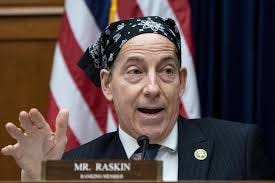
Happy birth month, Jamie Raskin, born 12/13/1962 in Washington, D.C. His father was Marcus Raskin, a progressive intellectual and social critic who was one of the co-founders of the progressive Institute for Policy Studies. After graduating from Harvard Law School Jamie served as general counsel of Jesse Jackson’s National Rainbow Coalition. He then became a constitutional law professor at American University for over twenty years. He was elected to the Maryland state senate in 2006 after defeating a centrist Democrat in the primary. He was an outspoken and incredibly well-spoken senator. He championed marriage rights for gays and the legalization of marijuana, and the separation of church and state.
When he announced his candidacy for the House in 2015 and was questioned about his leftist politics he replied “My ambition is not to be in the political center, it is to be in the moral center.” That response describes his eight years in the House in which he has risen to leadership - he helped lead the impeachment of Trump and will be the ranking member of the Judiciary Committee in the next Congress. He has been a leader even while grieving his son and dealing with non-Hodgkins lymphoma.
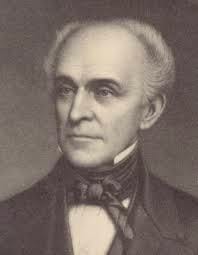
Birth month tribute to Edward Coles, born December 15, 1786, Albemarle County, VA. Abolitionist. Second governor of Illinois (1822-1828) .
Born in Virginia to a planter slave-owning family, Coles was an anti-slavery activist his entire adult life. He was profoundly influenced in this regard by professors at the College of William and Mary, especially Rev, James Madison, the first Episcopal Bishop of the Diocese of Virginia and President of the College.
Coles dropped out of William and Mary to come home to make sure his father left the family slaves to him so he could immediately manumit them. He also gave each of them sufficient land to develop successful farms.
A confidante of presidents Thomas Jefferson and James Madison (the bishop’s cousin) he urged both to free all their slaves -- to no avail. So don’t believe it it was just the times and everyone thought slavery was just.
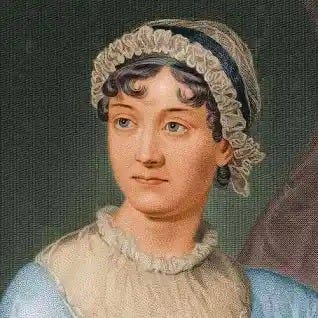
Birth month thanks to Jane Austen. Born December 16, 1775 in Steventon, Hampshire. Subversive novelist of manners, master of irony who was forced to publish anonymously because of a patriarchal culture that was there just to protect women, you know, from the rough and tumble world of commerce, independence and status mobility. Feminist icon, role model, early sower of seeds of liberation.
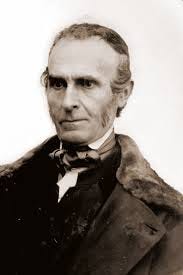
Birth month salute to John Greenleaf Whittier, born December 17, 1807 in Haverhill, Massachusetts. A poet whose purpose was to educate and inspire on moral issues. He received very little formal education but studied his father’s six books on Quaker faith and practice. These were the foundation of his lifetime commitment to the anti-slavery movement. Whittier was a politically oriented abolitionist who insisted moral statements must be paired with effective strategies for political change.
At what point does a man turn into a master? I don’t believe it’s when he does horrible things, but when he accepts that he’s able to do them, and that he does them well.
From the death of the old the new proceeds, and the life of truth from the death of creeds.
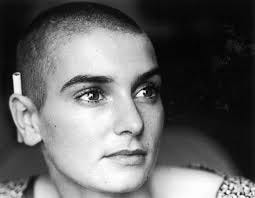
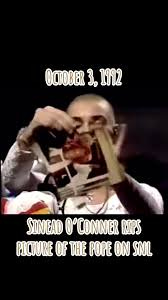
Sinead O’Connor. Born 12/8/1966 in Dublin. The third of four children, she was badly abused by her mother who sent her to a Magdalene laundry (reform school for “bad girls” run by nuns who worked the girls hard) after Sinead was caught shoplifting. She heard from others the reality of sexual abuse by priests and the cover-up by Irish bishops and the Vatican. On 10/3/92, while hosting Saturday Night Live she ripped up a photo of Pope John Paul II and said, “fight the real enemy.” I saw it live and I felt electrified. As a Catholic schoolboy I had my own experience of physical and spiritual abuse so I knew she was telling a very deep truth. I couldn’t believe she would immolate her career for the truth.
A banshee who warned the world of impending danger and death. A prophet, victimized as they all are, for speaking the truth. What we can learn from her is not to be deterred by public opposition in the form of derision or penalty. The price will be paid, inevitably, but way leads to way and once we have chosen the right path, or it has chosen us, we will be unable to jump off.
In “The Foggy Dew,” Sinéad sings a hymn of grief and love for those who fought in the Easter Rising of 1916. Though the Irish rebels were defeated by the imperial power and their “Huns” and “long-range guns,” and sixteen rebel leaders were quickly hanged by the highly civilized British, the uprising led in a few years to Ireland’s independence -- when “slavery fled.” I recommend a listen.1
Only Sinead would point to her temple to emphasize “through the foggy dew” -- of our conditioned thinking, our self-imposed slavery.
As Kris Kristofferson sang in his tribute song, “Sister Sinéad”:
Maybe she’s crazy and maybe she ain’t
but so was Picasso and so were the saints.”
**
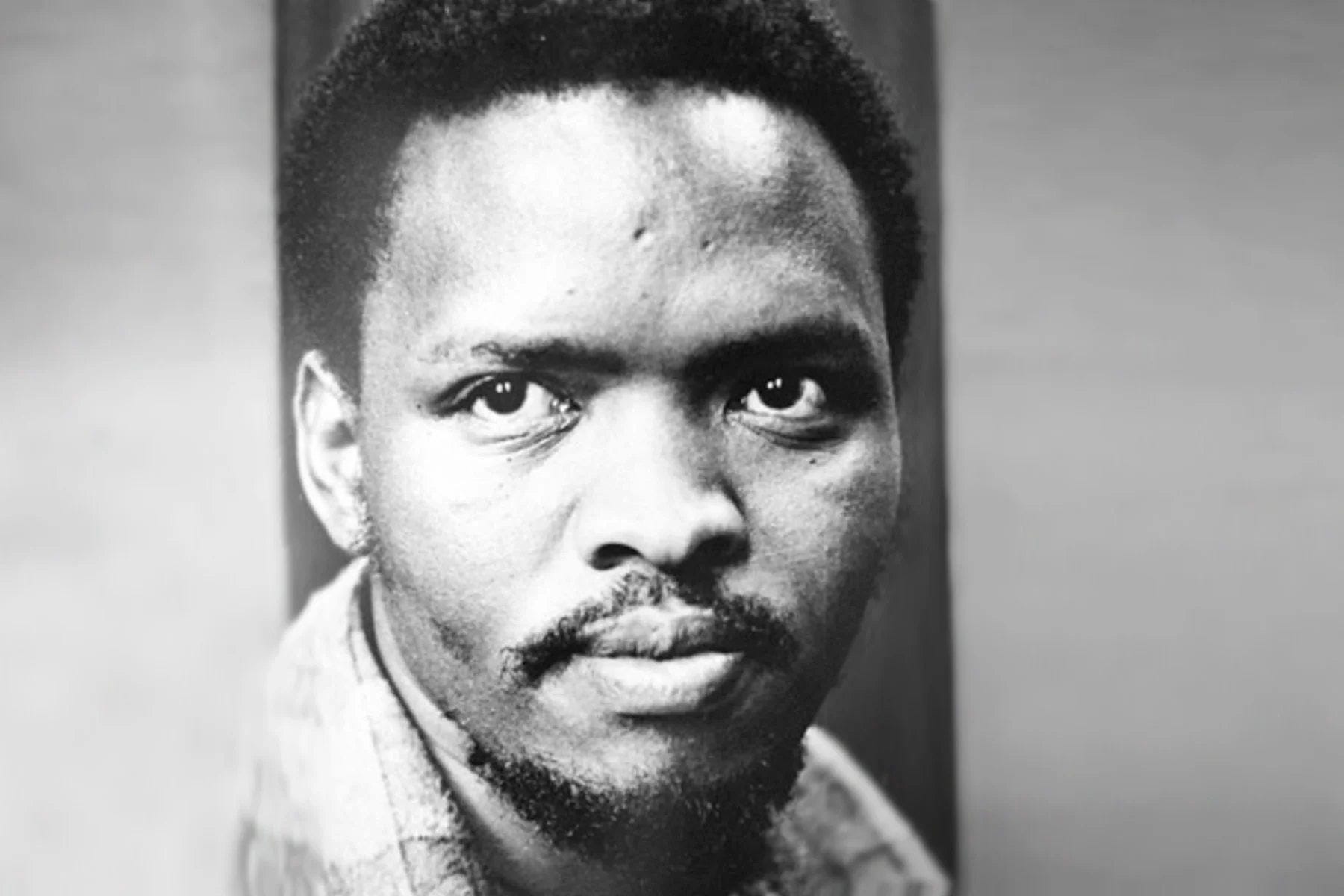
Let us honor Bantu Stephen Biko. Born 12/18/46, in Tarkastad, South Africa. Non-violent revolutionary. Liberator. Martyr.
Born into a Xhosa family in the Eastern Cape, his obvious brilliance led him to skip a grade and later enter medical school at the University of Natal where he joined the National Union of South African Students, an anti-apartheid organization. Disturbed by the prevalence of white leadership in such organizations and influenced by the Pan-Africanism and Marxist analysis of Frantz Fanon (“The Wretched of the Earth”), Biko led the development of the South African Students Organization, an anti-apartheid organization whose membership was limited to non-whites (blacks, colored, and South Asians).
SASO was not anti-white but followed the black consciousness movement in the U.S. As SASO achieved success in economic development and mobilization for voting rights, Biko became an intolerable threat to the government. Banned in 1974 Biko chose to travel to meet with other political leaders. He was arrested, brutally tortured, and killed. His murder and the government cover-up enraged people throughout the world, led to more divestment from South Africa, and contributed greatly to the end of apartheid and the presidency of Nelson Mandela.
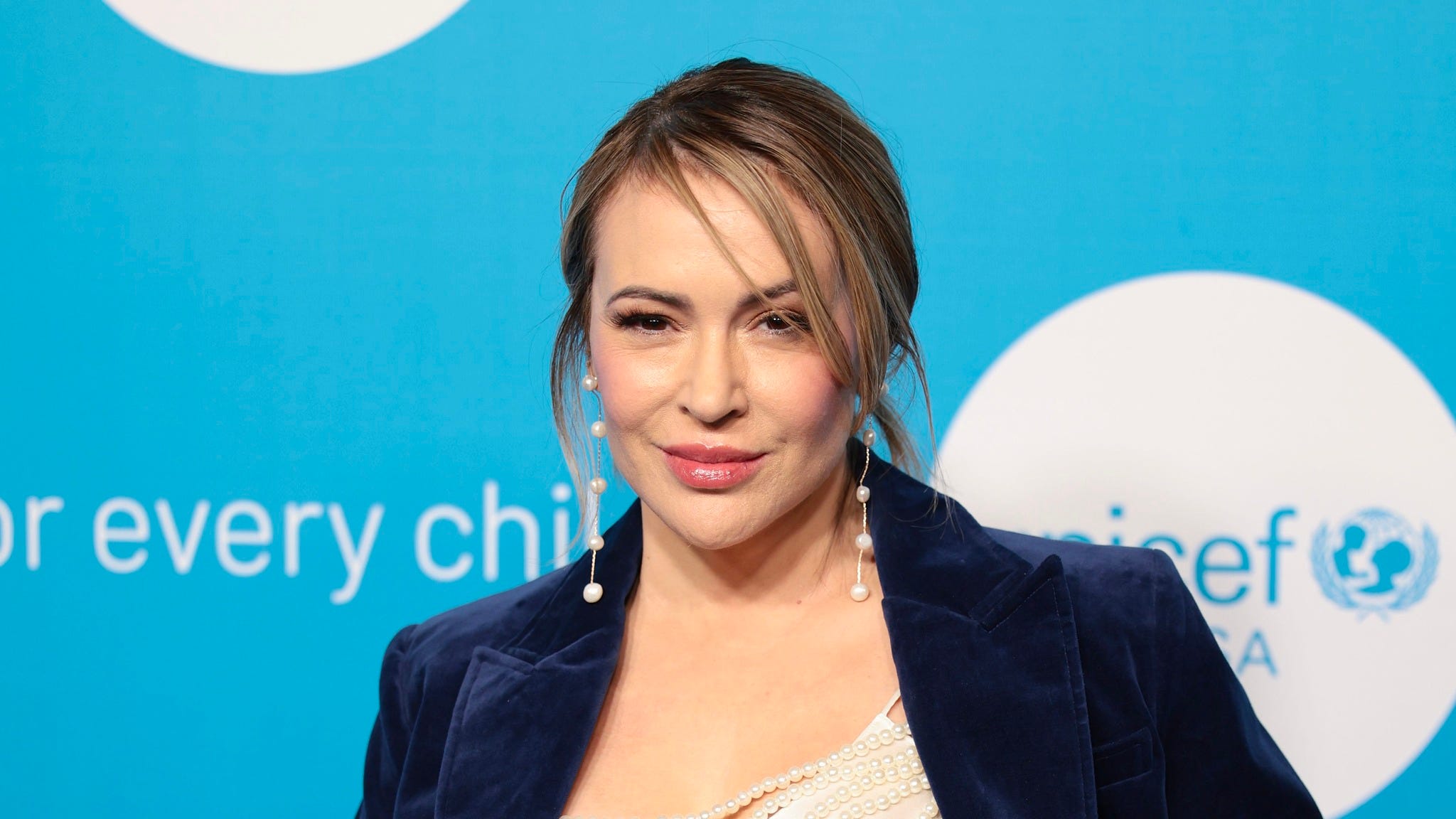
Who’s the Boss? Alyssa Milano, born December 19, 1972 in Bensonhurst, Brooklyn. Actor, author, baseball blogger, wife and mother, philanthropist, and progressive activist on many fronts -- a leading force behind #MeToo, AIDS action, clean water for Africa, and more. A persistent hero.
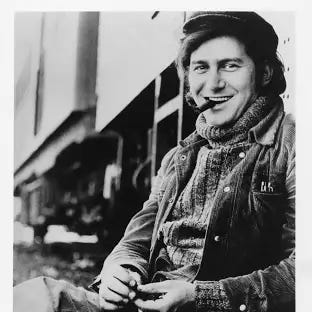
Birth month tribute to Phil Ochs, born December 19, 1940 in El Paso, Texas.
Singer/songwriter who moved easily from intense protest to sardonic putdowns of well-intentioned, do-nothing liberals to touching reflections on life and love. His protest songs against the Vietnam War and U.S. militarism and imperialism more broadly had the unmistakable quality of heartbreak. As much as he wanted to sneer at the stupidity and cruelty, he shared with MLK the experience of being disappointed by America.
His “Power and the Glory” has the same sense of awe at America’s beauty and potential as Woody Guthrie’s “This Land Is Your Land.” He could be somber and outraged in “The Marines Have Landed on the Shores of Santo Domingo” and beautifully reflective on a life of political commitment in “While I’m Here.”
The police brutality at the 1968 DNC in Chicago pushed him further left and the endless war broke him down. His latent bipolar disorder bloomed in his early 30’s and he started drinking heavily. He hanged himself at this sister’s house on Long Island in 1976.
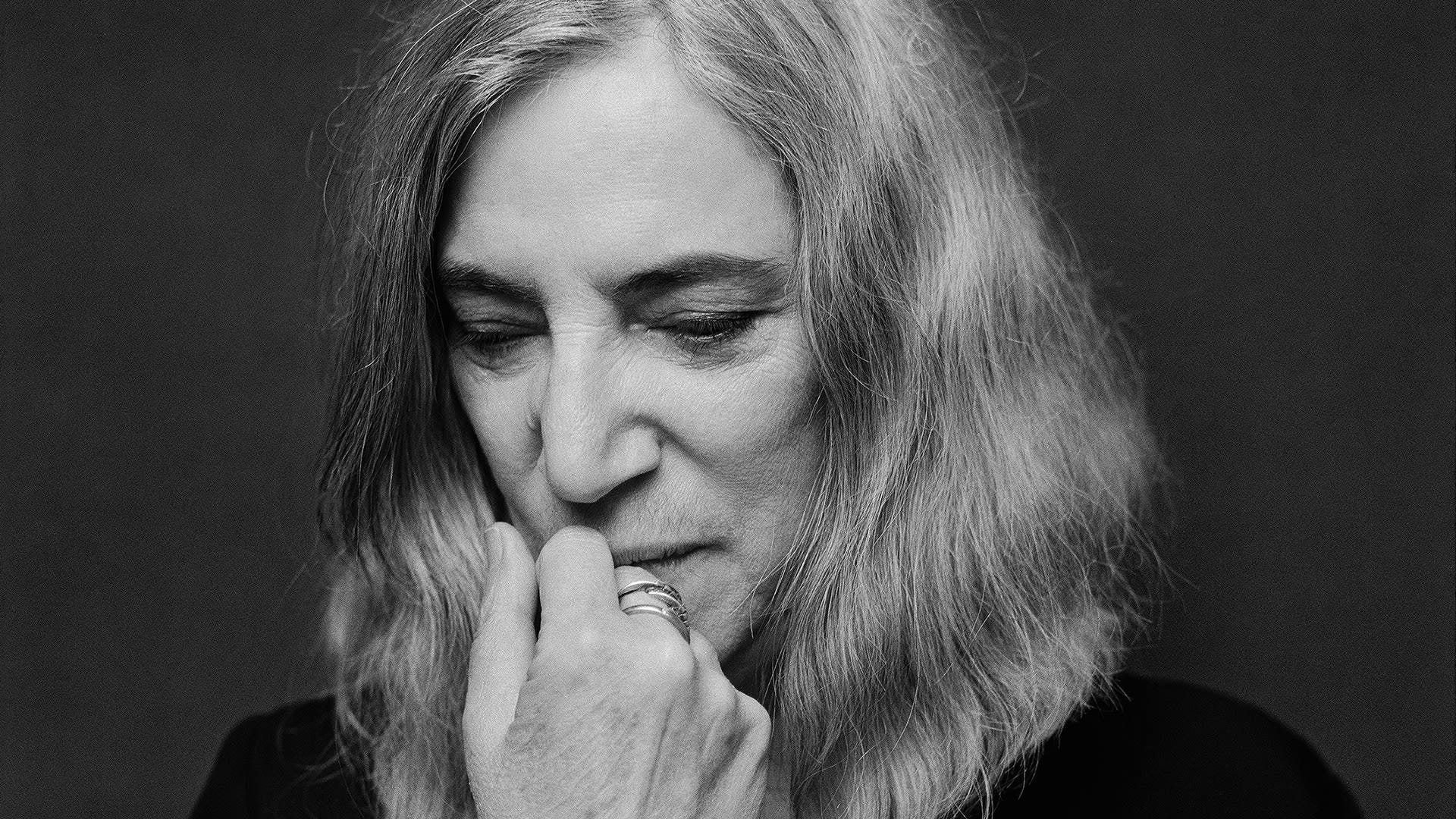
Happy birth month, Patti Smith, born 12/20/46 in Chicago. Jehovah’s witness child survivor, factory worker, punk poet laureate, essayist, playwright, National Book Award winner (“Just Kids”) rocker, lover, mother, freedom rider.
Jesus died for somebody’s sins
but not mine.
We’ll burn all of our poems
Add to god’s debris
We’ll pray to all of our saints
Icons of mystery
We’ll tramp through the mire
When our souls feel dead
With laughter, we’ll inspire
Then back to life again.”
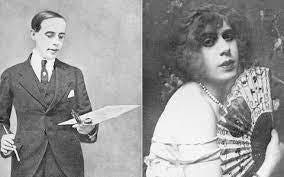
Happy birth month, Lili Elbe, born December 28, 1882 in Vejle, Denmark. Assigned male at birth (named Einar Wegener), she experienced gender dysphoria and underwent the first documented sex reassignment surgery in 1930. Prior to the surgery physicians determined that she had more female hormones than male, indicative of Klinefelter syndrome. What’s this? Her sexual status was not definitively male or female? She died of complications following a subsequent surgery in 1931.
Her story, and that of her wife Gerda Gottlieb, was told in Lili’s own account, Man into Woman (1931) and retold in David Ebershoff’s novel The Danish Girl (2000) and in the film by the same name (2015), for which Eddie Redmayne won the Oscar for best actor.
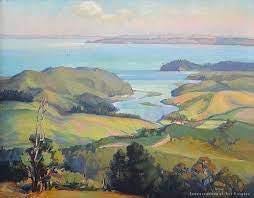
landscape by Lili Elbe
***** ******** ******
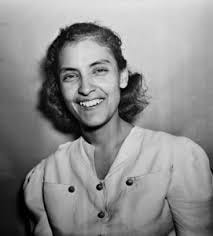
Emma Tenayuca, born 12/21/16 in San Antonio, Texas. The first of 11 children in a Mexican-American family whose roots in south Texas went back to when it was part of Mexico, before white settlers led the Texas Revolution and then then the Mexican-American War. As a child she lived with her grandparents to lighten the financial burden on her family.
The depression hit south Texas hard and Tenayuca saw the desperate poverty of many, particularly fellow Mexican-Americans. She joined LULAC, the League of United Latin American Citizens but resisted their suggestions that established Mexican-Americans avoid associating with Mexican immigrants. She then joined the Communist party despite the threats and experience of violence directed against Commies.
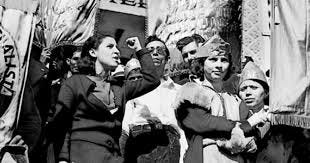
At 22 she joined pecan workers who went on strike. She organized picket lines and became the leading speaker, articulating the terrible working conditions of pecan shellers. The strike forced the owners into arbitration which gained recognition of the shellers union and in an increase in wages. Her success led to a cover story and photo in Time magazine. In 1938 a communist organizer could get positive recognition.
She went to college for a B.A. and a master’s degree in education and became a schoolteacher in San Antonio public schools.
She never wavered in her support for workers’ rights. She became a strong peace activist as do most social activists who see how wars are ways the rich gain benefits on the bodies of the poor and working-class.
Her advocacy for the working poor – especially Mexican American women – led her to become known as “La Pasionaria.” She remains an inspiration to contemporary activists and residents of south Texas. A bilingual children’s book about her was published in 2008, That’s Not Fair! Emma Tenayuca’s Struggle for Justice https://www.zinnedproject.org/materials/thats-not-fair-no-es-justo/
I was arrested a number of times. I never thought in terms of fear. I thought in terms of justice.
These lines in “The Foggy Dew”: “Twas better to die ‘neath an Irish sky than at Suvla or Sud el Bar,” refer to two locations within Gallipoli, site of Great Britain’s disastrous Turkish campaign in WWI. The song, written by Catholic priest Charles O’Neill, makes a distinction here between fighting for Irish independence and fighting for the imperial power that had occupied Ireland and oppressed the Irish since the 11th century.
I didn't see the film, but I will try to catch up in the next month. Yes, on While I'm Here. There are moments that require for me a re-listen. Thanks for sharing this.
Thanks for this one, Jim! Do you remember seeing Denzel Washington play Biko in the movie Cry Freedom? It was way too white as a movie, but it did tell his story and DW was great in the role. I'm also a huge fan of Phil Ochs. "While I'm Here" is one of my touchstone songs.